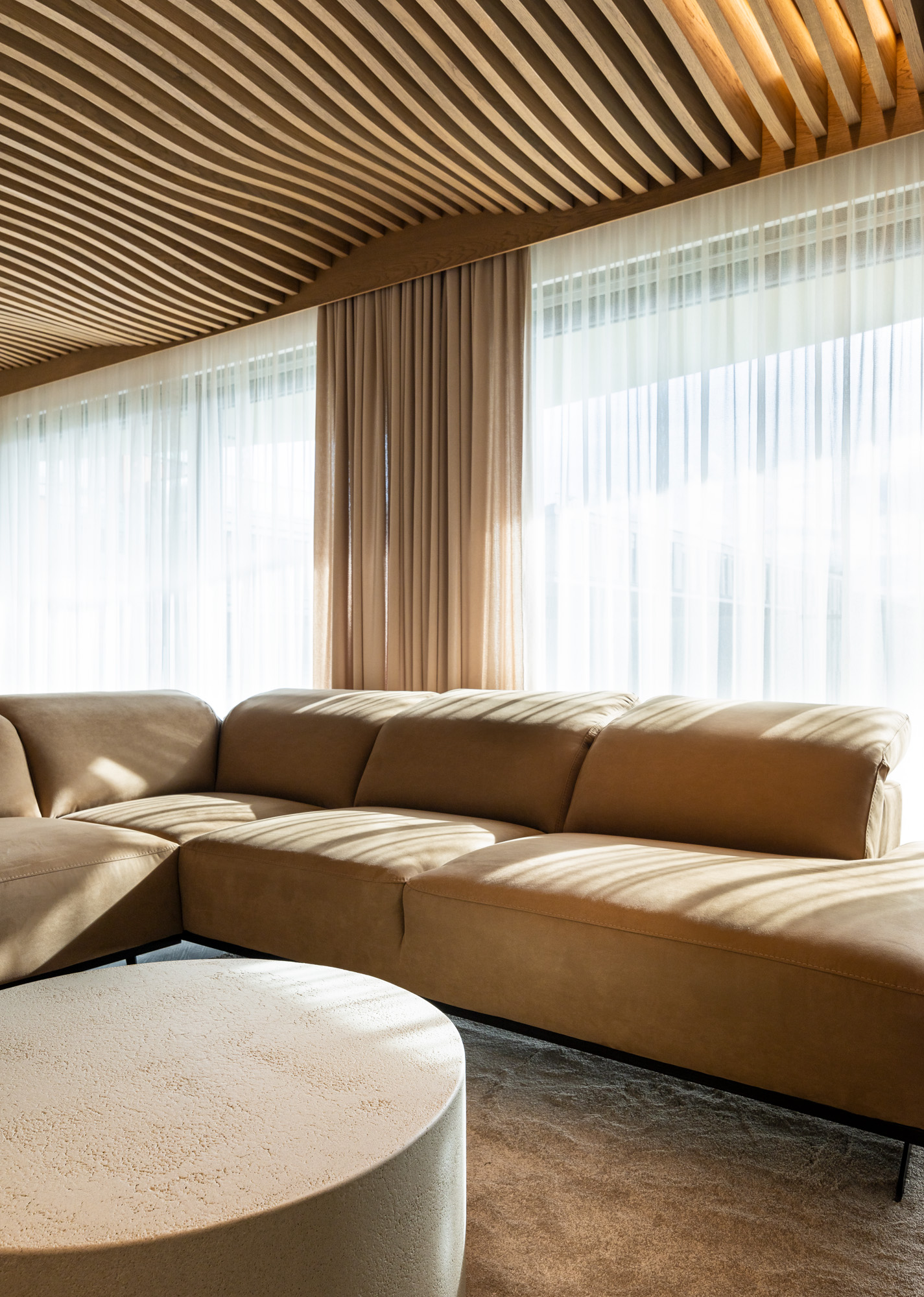
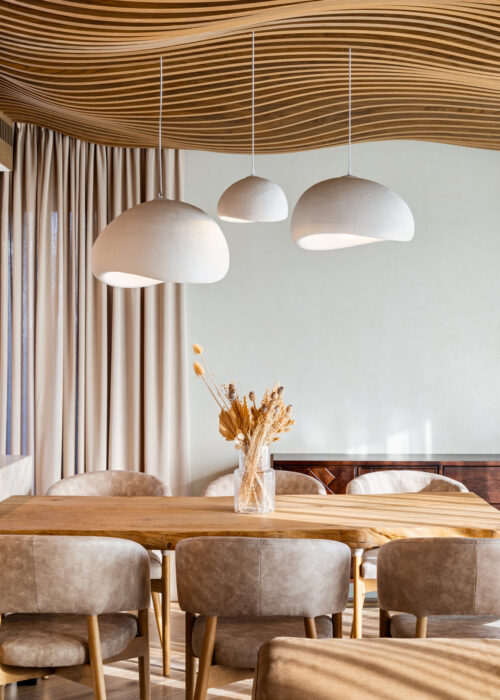
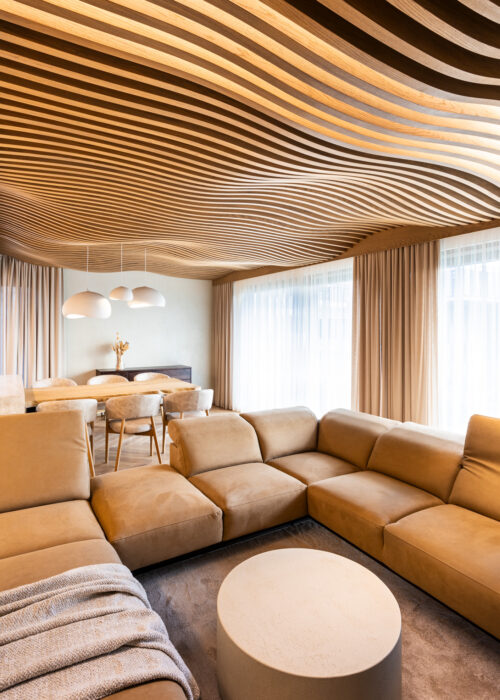
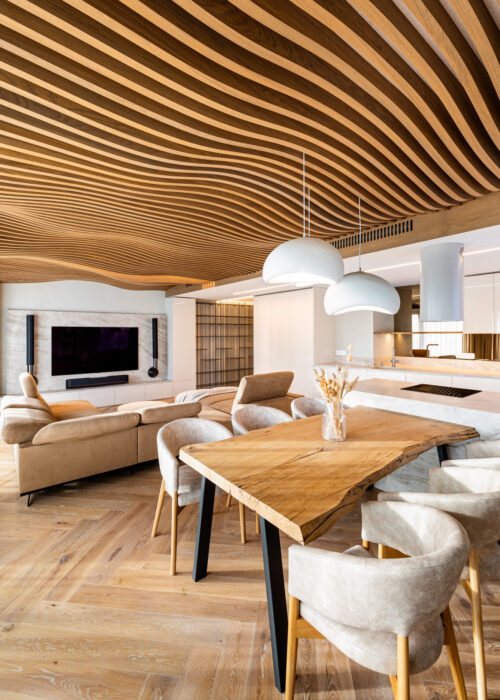
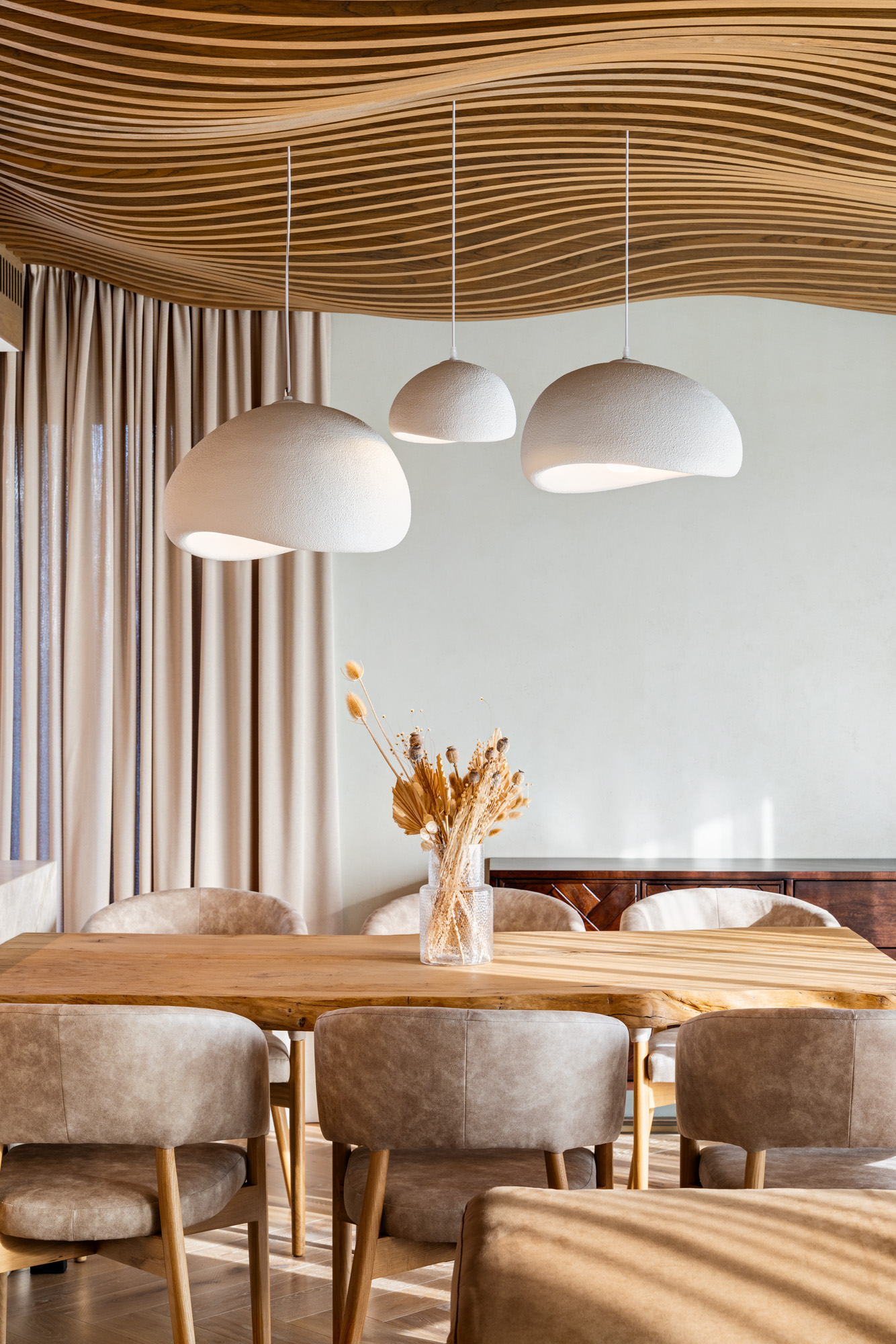
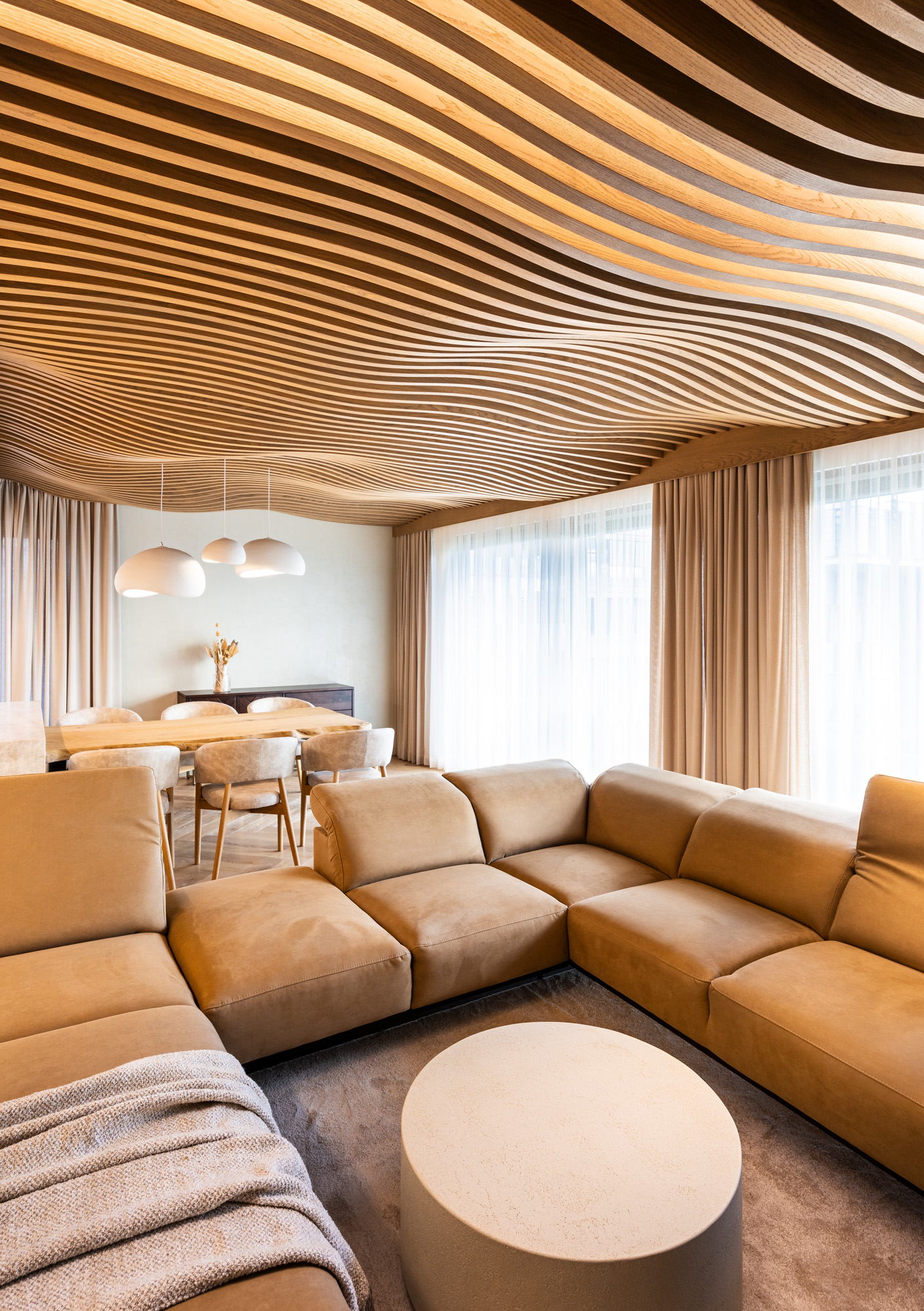
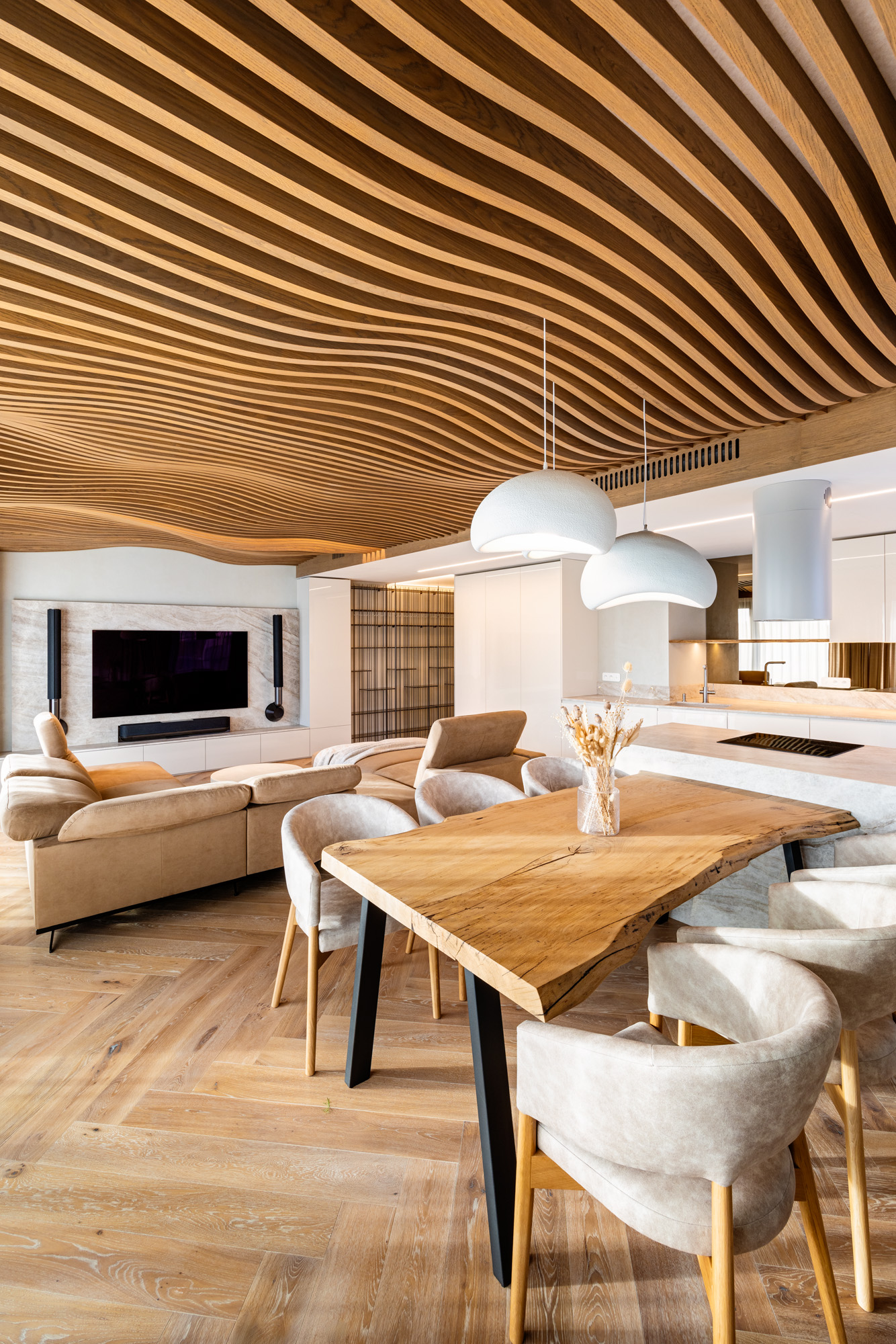
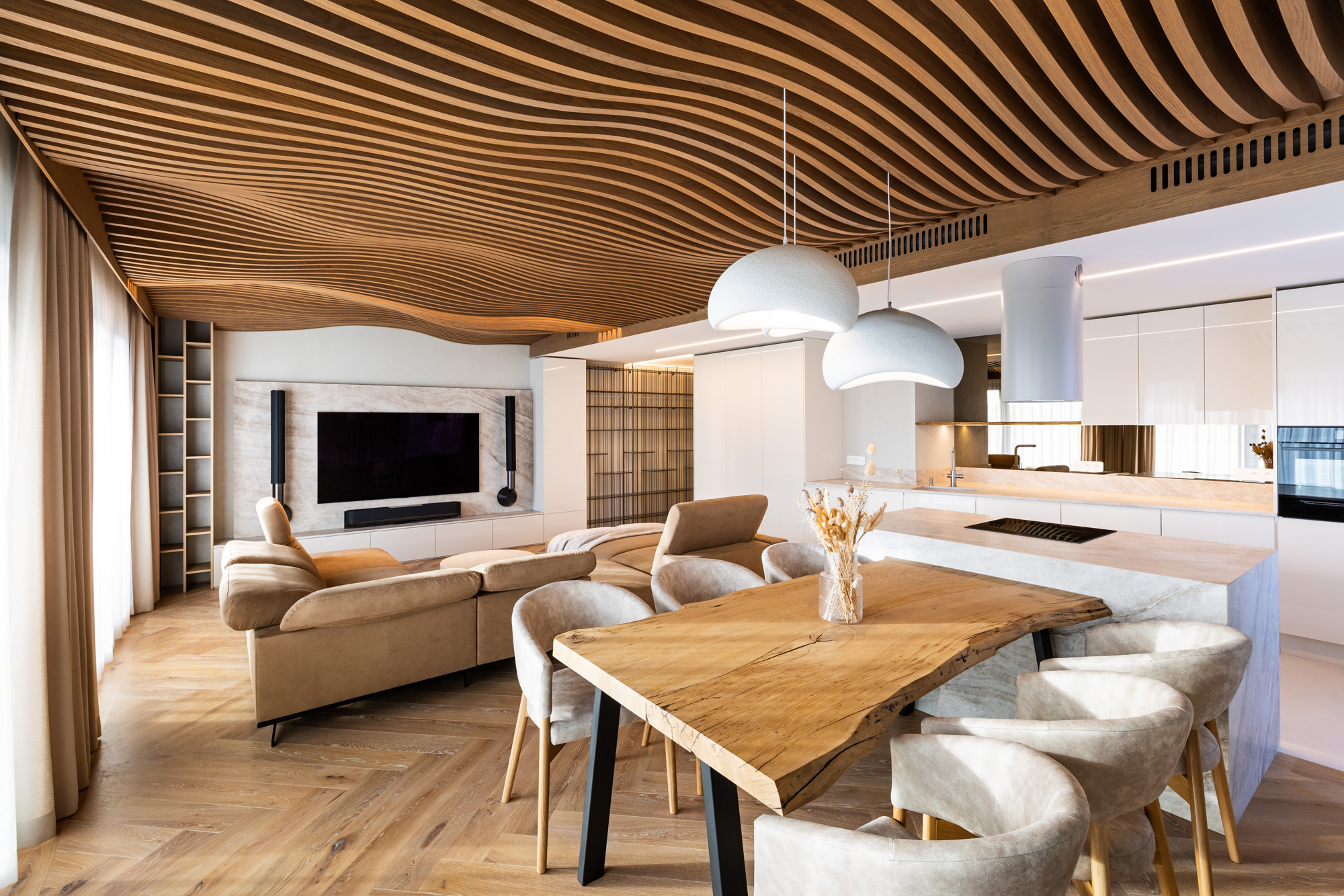
Airwood is a ceiling built from wooden lamellae that flows across the room as a wave. The shape follows the space and settles into it, and the movement makes a heavy-looking material read as light. Here it runs above the open living room and kitchen of a luxury apartment.
Airwood
A sound absorbing wooden lamellas, generated by data
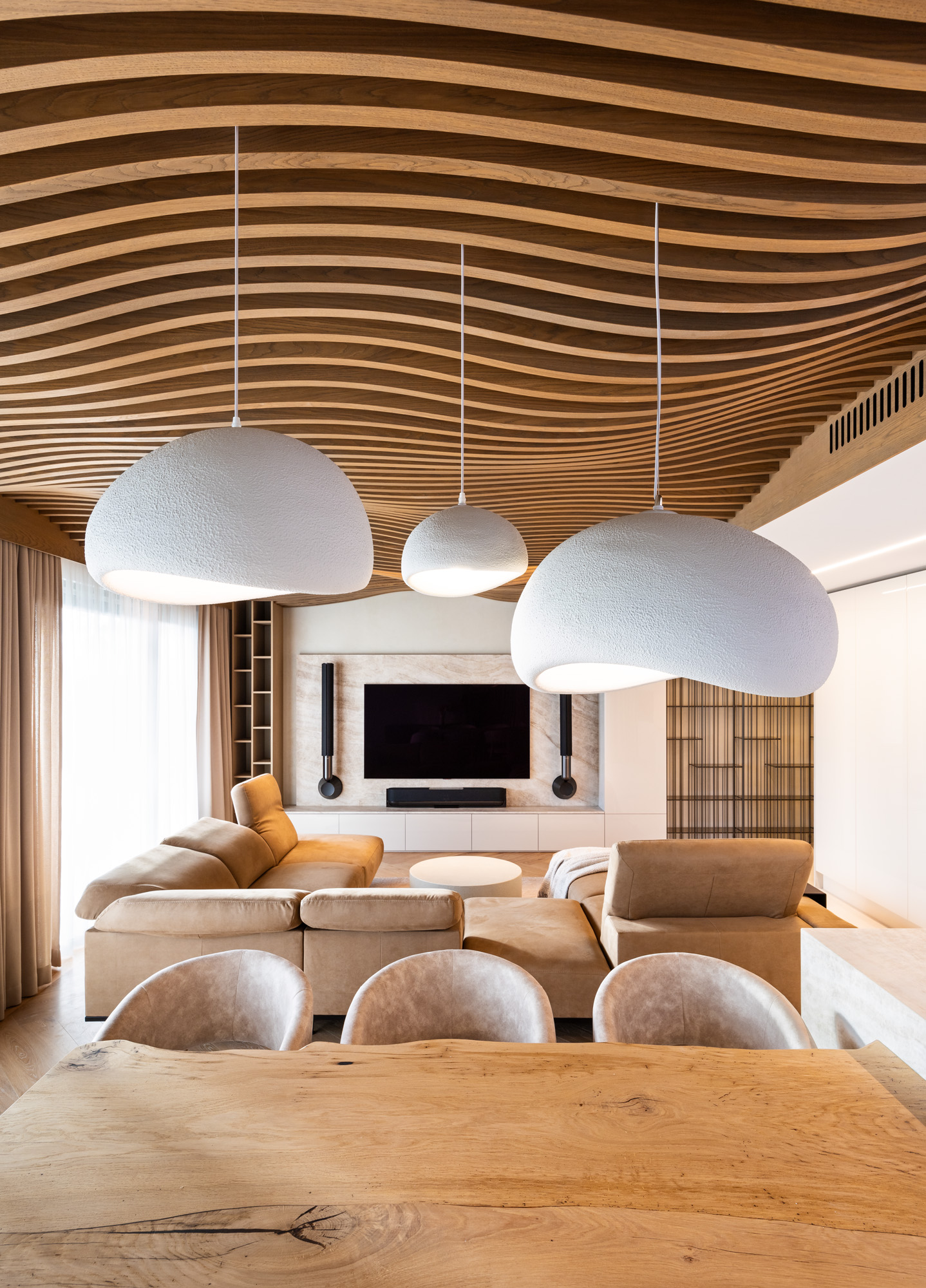
Quiet, and light enough to retrofit
The ceiling is more than a design piece: it doubles as an acoustic panel that soaks up sound. Its lamellae — real veneer on a light foam core — are light thanks to a construction developed by Mood Pasta, so it barely loads the building. Such system allows installation into renovations where the ceiling can’t carry much weight. Assembly is quick, and the form adapts to any space.
A system, not a single design
The photo shows one result; but what I built for Mood Pasta is the system behind it. I make the tools first — a generative scripts — and then design with them. The tool lays out lamellae across almost any ceiling or wall shape, sets their thickness and spacing, and tunes the waves from gentle to sharp, into polygonal patterns, or compositions that run in several directions at once.
The script writes the DXF cutting data for the boards directly, along with an on-site assembly plan for the crew: from the design to the workshop floor in one move.